
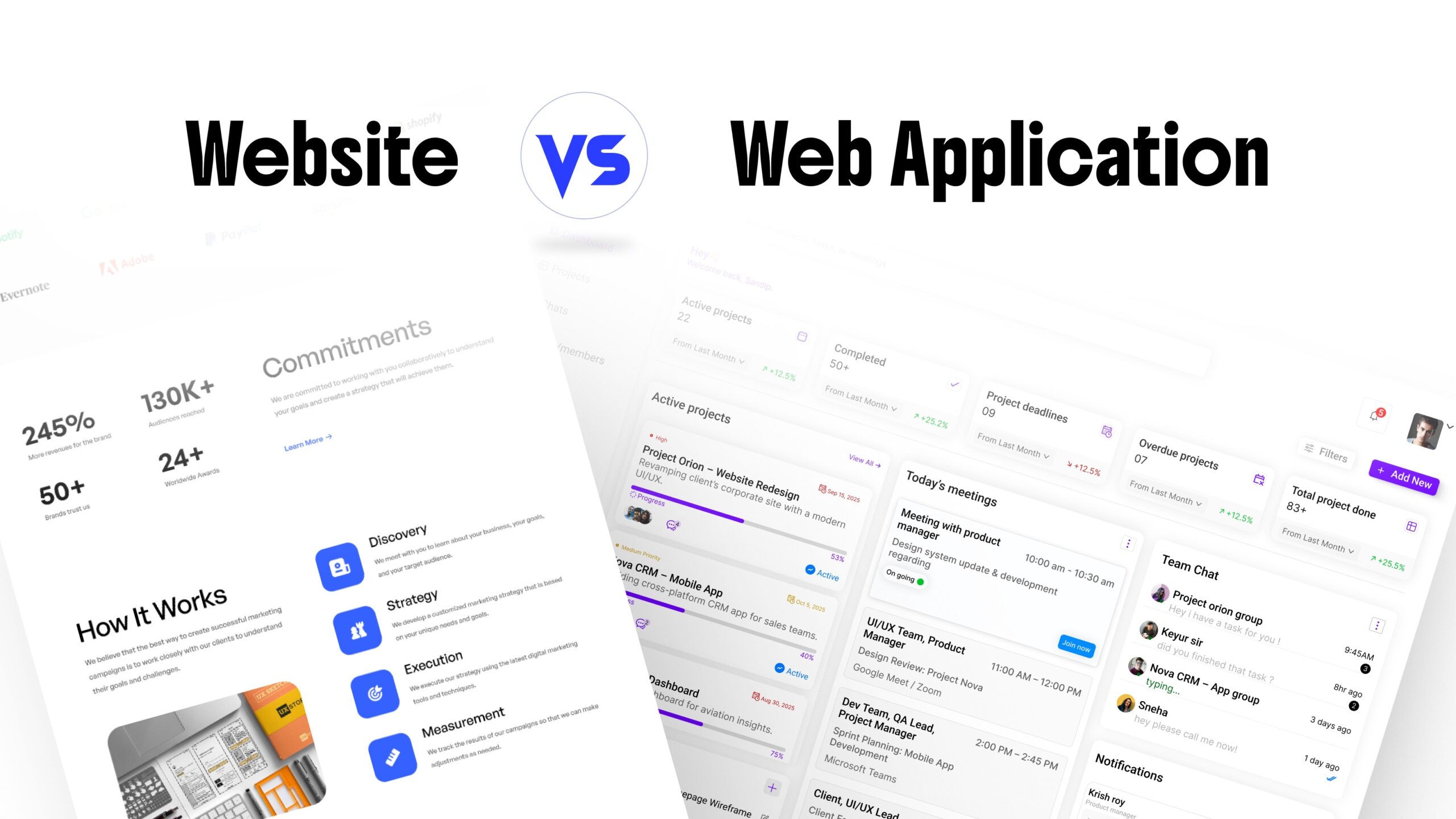
In today’s digital era, businesses are rapidly moving online to connect with customers, improve visibility, and provide better services. During this process, two terms are commonly heard: website and web application. Although many people think they are the same, there are significant differences between the two. Both operate through internet browsers, but their purpose, functionality, complexity, and user interaction are completely different.
Understanding the difference between a website and a web application is important for businesses, startups, and entrepreneurs looking to build a strong digital presence. Choosing the right platform can directly impact customer experience, business efficiency, and overall growth.
What is a Website?
A website is a collection of linked web pages that mainly focuses on delivering information to users. It is designed for visitors to read content, explore services, learn about a company, or access resources online. Websites are generally informational and allow limited user interaction.
For example, company websites, blogs, news portals, educational websites, and portfolio websites are all considered websites. Their primary goal is to provide information and establish an online identity for businesses or individuals.
Websites can be static or dynamic:
- Static websites display fixed content and are simpler to build.
- Dynamic websites update content regularly using databases and content management systems.
Main Features of a Website
- Informational pages
- Responsive design for mobile devices
- SEO-friendly structure
- Contact forms
- Blogs and articles
- Service or product showcase
Websites are usually easier and faster to develop. They are ideal for businesses that want to increase brand awareness, attract customers through search engines, and display their products or services online.
What is a Web Application?
A web application is a more advanced and interactive digital platform that allows users to perform specific actions or tasks. Unlike websites, web applications are built for user engagement and functionality. Users can log in, manage accounts, process data, communicate, make payments, or perform other activities directly within the application.
Popular examples of web applications include:
- Online banking systems
- E-commerce platforms
- Customer relationship management (CRM) software
- Social media platforms
- Online booking systems
- Project management tools
A web application works similarly to software but runs inside a browser instead of being installed on a device.
Main Features of a Web Application
- User authentication and login systems
- Real-time data processing
- Personalized dashboards
- Database integration
- Payment gateway integration
- Interactive user interface
- Advanced security features
Web applications require more development time, advanced programming, APIs, databases, and security implementation compared to websites.
Major Differences Between Website and Web Application
Although both websites and web applications are accessed through browsers, their purpose and functionality make them different.
1. Purpose
The primary purpose of a website is to provide information. It helps businesses showcase services, share updates, publish blogs, and create an online presence.
A web application, however, is designed to help users perform tasks and interact with data. It focuses more on functionality and user engagement.
2. User Interaction
Websites offer limited interaction. Users mainly read or view content and may submit forms or inquiries.
Web applications provide high levels of interaction. Users can create accounts, upload data, make purchases, communicate, and manage information.
3. Authentication
Most websites do not require users to log in unless there is a member section.
Web applications usually require user authentication because they store personal data and offer customized experiences.
4. Complexity
Websites are generally simpler in terms of development and functionality.
Web applications are more complex because they involve databases, backend systems, APIs, security measures, and real-time processing.
5. Development Cost
Website development is usually more affordable and takes less time.
Web applications are costlier because they require advanced technologies, testing, maintenance, and security implementation.
Website vs Web Application Comparison Table
Feature | Website | Web Application |
|---|---|---|
| Purpose | Deliver information | Perform tasks and functions |
| Interaction | Limited | Highly interactive |
| Login System | Usually optional | Commonly required |
| Complexity | Simple | Advanced |
| Database Usage | Minimal | Extensive |
| Development Time | Faster | Longer |
| Cost | Lower | Higher |
| Examples | Blogs, company websites | Banking apps, SaaS platforms |
Benefits of a Website
A website is beneficial for businesses that want to:
- Build online credibility
- Improve search engine visibility
- Generate leads
- Share business information
- Promote products and services
- Reach a wider audience
Websites are especially useful for small businesses, startups, agencies, and personal brands looking for a cost-effective digital presence.
Benefits of a Web Application
Web applications provide advanced functionality and automation. Businesses choose web applications to:
- Improve customer engagement
- Automate business operations
- Offer online services
- Manage customer data
- Enable secure online transactions
- Provide personalized user experiences
Web applications are commonly used by enterprises, e-commerce companies, financial institutions, and service-based platforms.
Which One Should You Choose?
The decision depends entirely on your business goals and requirements.
Choose a website if:
- You want to share information online
- You need a professional online presence
- Your goal is branding and lead generation
- You have a limited budget
Choose a web application if:
- Your users need interactive features
- You require account management or dashboards
- Your business needs automation
- You offer online services or transactions
Many modern businesses combine both by integrating web application functionality into websites. For example, an e-commerce website may include shopping carts, payment systems, and user accounts, making it partially a web application.
Final Thoughts
Both websites and web applications are essential parts of the modern digital ecosystem. A website helps businesses establish visibility and credibility online, while a web application provides advanced functionality, user interaction, and automation.
Understanding the difference between the two allows businesses to make smarter digital decisions based on their goals, target audience, and budget. Whether you need a simple informational website or a feature-rich web application, investing in the right digital solution can help your business grow and stay competitive in today’s online market.