
Most business websites are still built to inform. The ones winning in 2026 are built to convert, and increasingly, that means combining the performance of Next.js with AI capabilities baked directly into the user experience. The result is a website that doesn’t just describe your business; it actively works to identify, engage, and qualify leads while your team sleeps.
Here’s how AI-powered Next.js websites are reshaping lead generation and what it actually takes to build one.
Why Next.js Is the Foundation for Lead-Gen Websites
Before AI even enters the picture, the framework matters. Next.js has become the default choice for performance-focused, lead-generation-driven websites for a few clear reasons:
- Server-side rendering (SSR) and static generation mean pages load fast, and speed is directly tied to form conversion rates
- Built-in SEO advantages from clean rendering and structured metadata help you rank for the terms your leads are actually searching.
- Scalability, so your site performs the same whether you get 50 visitors a day or a sudden spike from a campaign or press mention.
- Flexibility for dynamic, personalized content, which is exactly what AI-driven personalization needs to function well
If your current site is on a page builder or an older CMS and is struggling with speed or flexibility, migrating to Next.js development is usually the first real lever for improving lead quality and volume.
Where AI Actually Fits Into the Lead-Gen Equation
“AI-powered website” gets thrown around loosely. Here’s what it concretely looks like on a Next.js site built for lead generation:
1. Intelligent Chat & Conversational Capture
Instead of a static contact form, an AI-driven chat assistant can qualify visitors in real time, asking the right follow-up questions, answering common objections, and routing high-intent leads straight to your sales team, 24/7.
2. Dynamic Content Personalization
Using visitor behavior, referral source, or even industry signals, an AI layer can adjust headlines, case studies, or CTAs shown to a visitor, showing a healthcare prospect different proof points than a logistics prospect without maintaining separate pages manually.
3. Predictive Lead Scoring
AI models can analyze on-site behavior (pages visited, time spent, content downloaded) and flag which leads are most sales-ready, so your team spends time on the right conversations first.
4. Smart Forms That Reduce Drop-Off
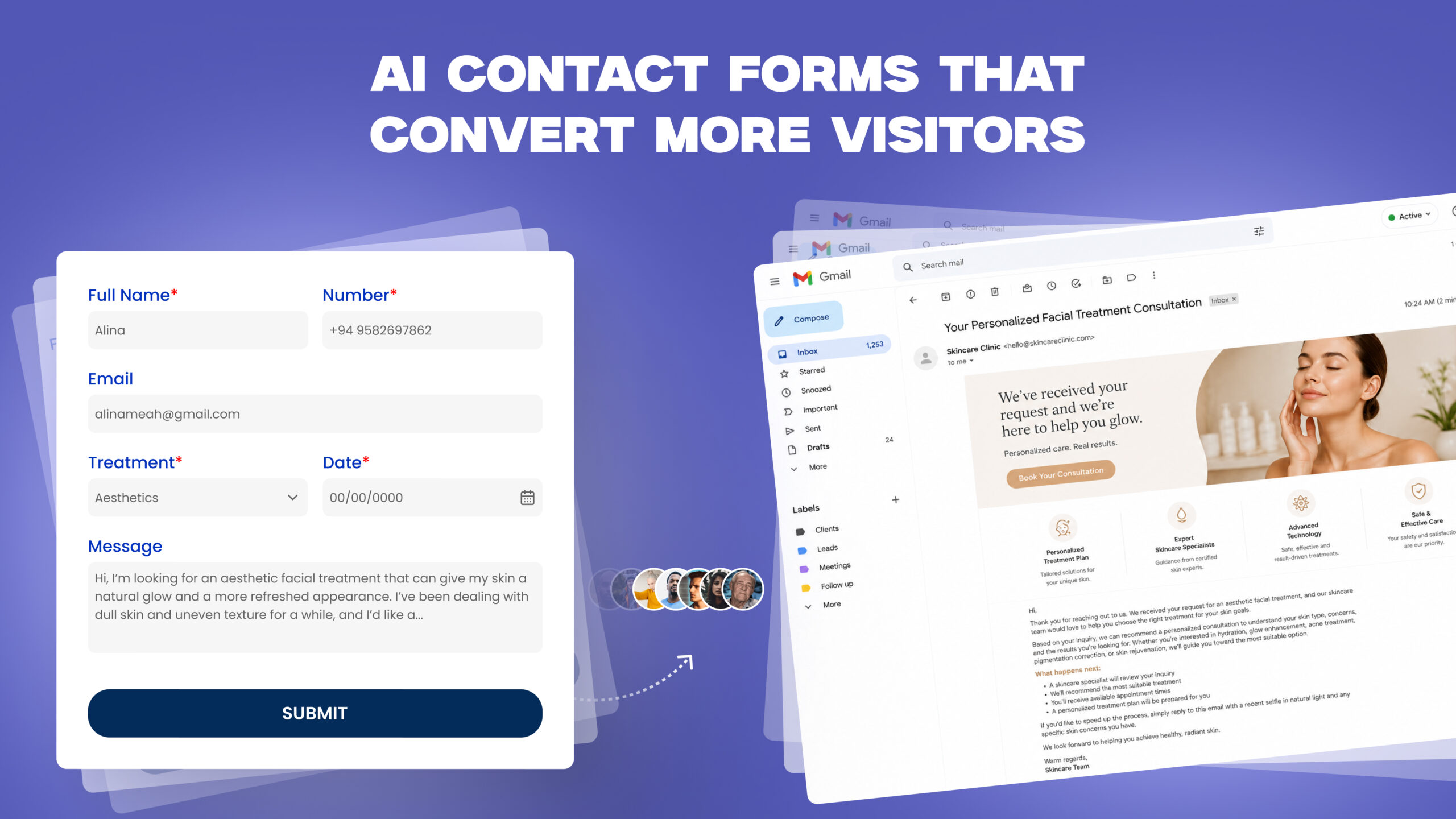
AI can shorten forms dynamically, pre-fill known information, or adjust questions based on earlier answers, reducing the friction that causes most visitors to abandon a lead form halfway through.
5. Automated Follow-Up Triggers
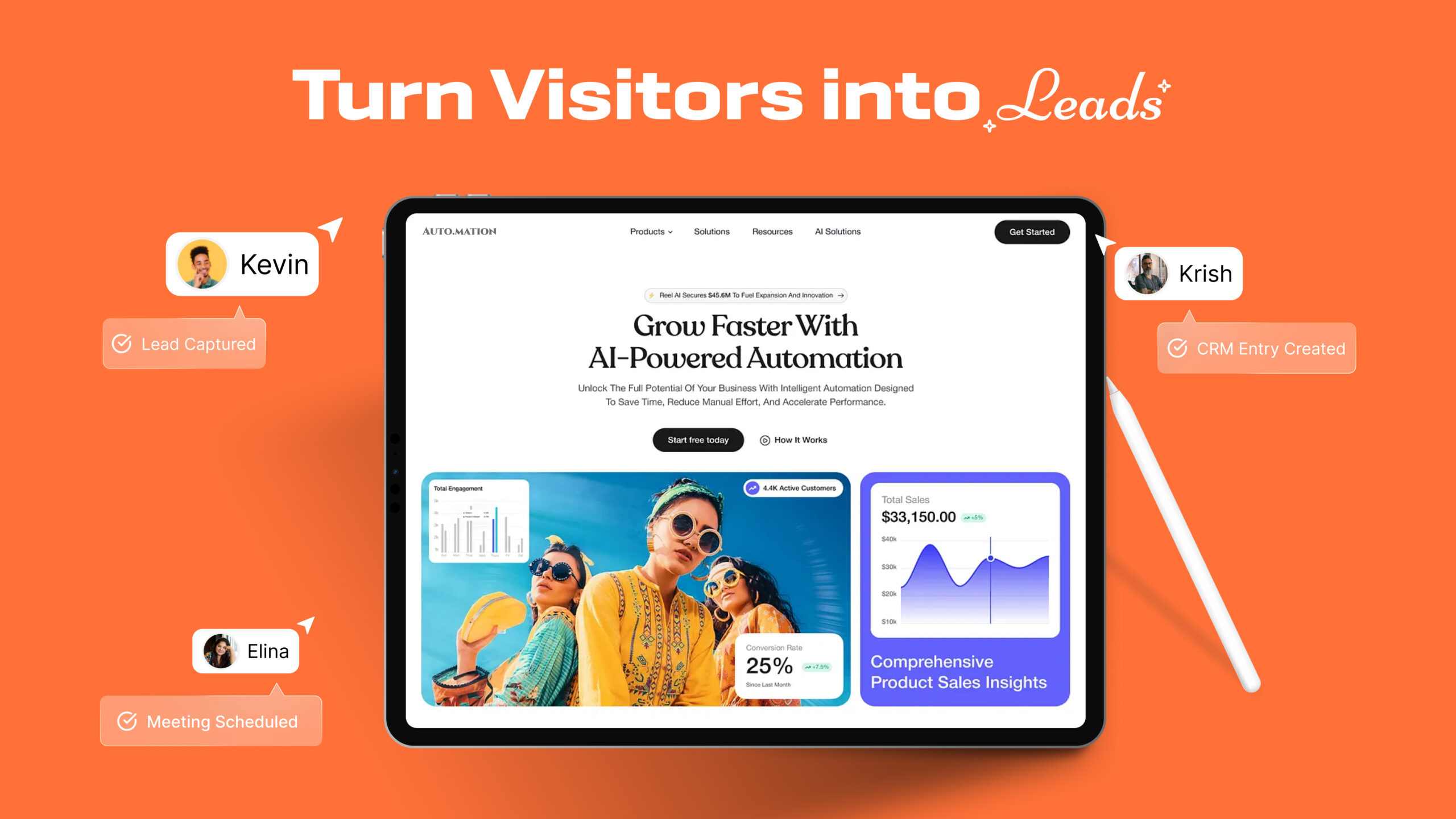
Once a lead converts, AI-driven workflows can trigger the right nurture sequence immediately, rather than waiting for manual follow-up. This matters because lead response speed is one of the strongest predictors of conversion to a sale.
This is where our AI & Machine Learning services come in. We build these capabilities directly into the website rather than bolting on a generic third-party widget that doesn’t match your brand or workflow.
What This Looks Like in Practice
Imagine a B2B services company that redesigns its site in Next.js with AI woven in from day one:
- A visitor lands from a Google search on a specific service page
- The page dynamically surfaces a relevant case study based on referral and behavior signals
- An AI chat widget engages after 20 seconds of scrolling, offering to answer questions instead of pushing a generic “Contact Us” form.
- The visitor asks a qualifying question; the assistant captures their email and use case naturally within the conversation. n
- That lead is instantly scored and routed to the right sales rep with full context, while a personalized follow-up email fires automatically
None of this requires the visitor to feel like they’re talking to a bot doing the bare minimum. Done well, it feels like a genuinely responsive, helpful website.
Common Mistakes to Avoid
- Bolting AI on top of a slow site. If your Next.js implementation isn’t optimized first, AI features will feel sluggish and undermine trust rather than build it.
- Over-automating the human touch. AI should qualify and assist, not replace a real conversation once a lead is genuinely ready to talk to your team.
- Ignoring data privacy. Any AI feature capturing visitor data needs to be transparent and compliant, especially for industries like healthcare, finance, or legal.
- Treating AI as a one-time install. Lead scoring models and personalization logic improve over time with real data. They need monitoring and refinement, not a “set and forget” launch.
Getting Started
The highest-leverage approach is usually to combine a performance-first Next.js rebuild with AI features scoped around your actual sales process, not every AI capability available, just the ones that remove real friction for your specific leads. Our team pairs Next.js and React development with hands-on AI/ML integration and UI/UX design so the result feels cohesive rather than stitched together.
Ready to turn your website into an active lead-generation engine? Get in touch with eLeoRex Technologies for a free consultation on what an AI-powered Next.js site could look like for your business.
If you’re looking to bring something new to your business, whether that’s a faster website, an AI-powered lead engine, or a full digital overhaul, drop us a line at manager@eleorex.com and let’s talk about what’s possible.
FAQs
Do I need to rebuild my entire website to add AI features? Not always. Some AI capabilities, like chat and lead scoring (GG), can be layered onto an existing site. But if your current site is slow or built on an outdated CMS, a Next.js rebuild typically delivers better long-term results and ROI.
Is Next.js good for SEO? Yes. With proper server-side rendering and static generation, Next.js sites generally perform very well for both page speed and search visibility, both of which support inbound lead generation.
How long does it take to build an AI-powered Next.js website? Timelines vary by scope, but a mid-sized business site with core AI features (chat, personalization, lead scoring) typically takes several weeks to a few months, depending on integrations and content readiness.