
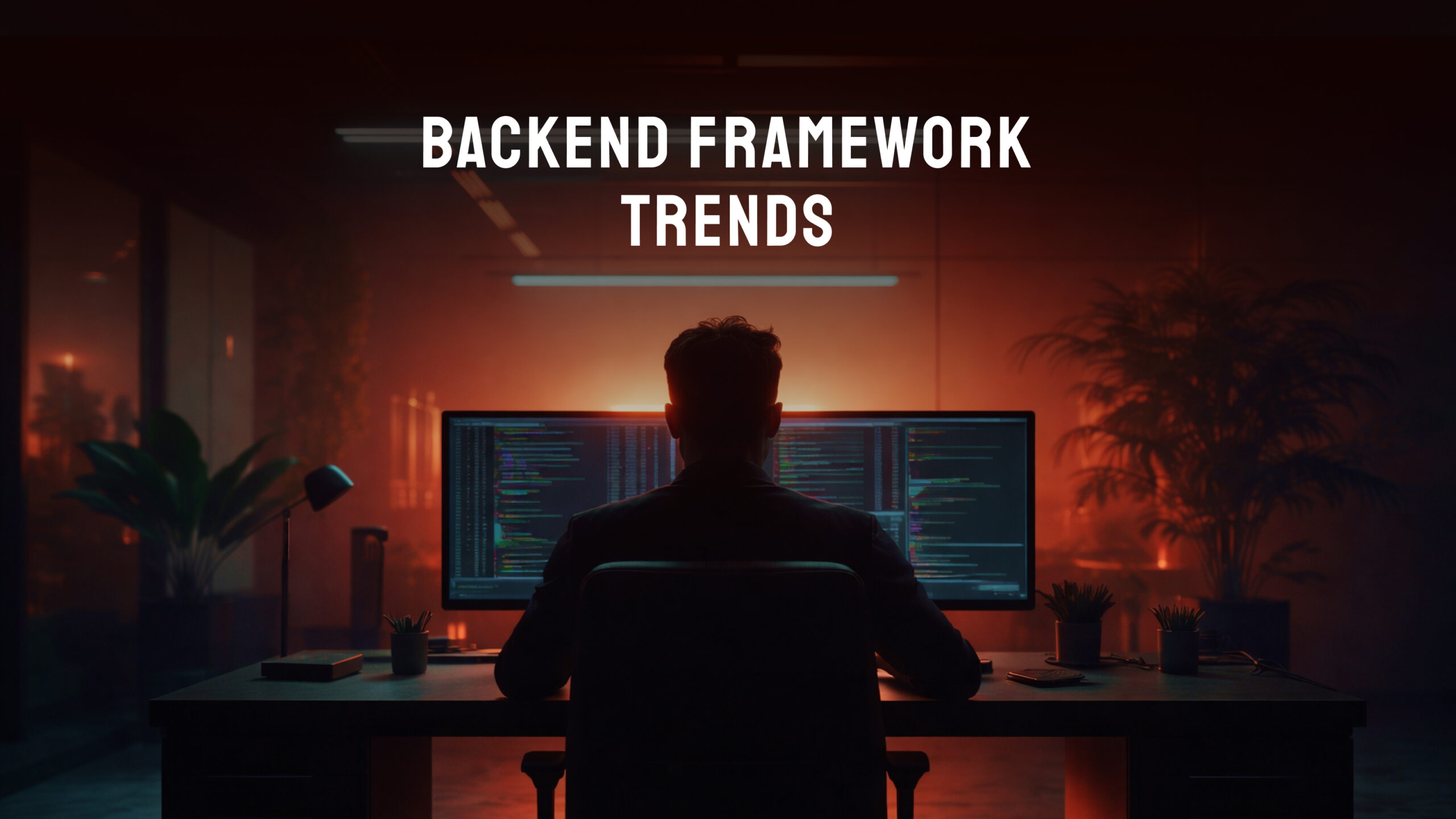
The landscape of backend development is rapidly evolving. Improved technologies, enhanced performance, and increased demands of users are prompting developers to opt for efficient frameworks. Backend frameworks in 2026 are no longer mere request-handlers but are expected to be fast, secure, scalable, and to integrate seamlessly with advanced technologies. Below are the major backend framework trends in 2026.
1. Rise of Lightweight and Fast Frameworks
It is becoming more important to be fast. Website and application users demand fast loading of pages. Due to this, developers now use lightweight frameworks that decrease loading time. Frameworks such as Node-based and Go-based are popular due to their ability to withstand heavy loads and not slow down.
Instead of complex frameworks, developers prefer easy frameworks that give more results with fewer lines of code.
2. API-First Development Approach
Modern software systems depend highly on APIs. No matter whether the application is a mobile app, a web app, or integration with another third party, all connections happen via APIs.
The backend development frameworks for the year 2026 are designed with the concept of “API first.” Here, the APIs are developed before the other components of the system are created.
It becomes much easier for the developer to develop scalable and flexible software systems using such frameworks. Frameworks supporting REST and GraphQL APIs are gaining popularity.
3. Focus on Scalability and Microservices
Big applications are not developed in one system anymore but are broken down into small pieces of software known as microservices.
There are frameworks developed specifically to work within this architecture. One can develop, modify, or expand a specific component of the whole system individually.
It works well for expanding companies. This way, the system won’t break down because there are too many users. Frameworks for microservices will dominate the industry by 2026.
4. Built-In Security Features
Security is very important to every company. Information leaks and cyberattacks may affect a company’s goodwill and reputation.
The present-day backend framework is becoming more security-focused. The new generation backend framework provides a wide range of security options, including authentication, data encryption, and safeguarding against SQL injection attacks.
The developers will favor the use of secure backend frameworks in 2026.
5. Better Support for Cloud and Serverless
The era of cloud computing has arrived, where organizations seek scalable solutions without worrying about server management.
The backend framework technology is constantly changing in favor of supporting cloud computing and serverless architecture. Programmers can create and distribute apps easily, paying for resources used exclusively.
Such an approach allows companies to cut expenses and enhance productivity. Cloud-friendly frameworks will remain relevant in the future.
6. Integration with AI and Automation
Artificial intelligence is being used in numerous applications. From chatbots to recommendation engines, the backend frameworks must incorporate the ability to integrate AI functions.
By 2026, there will be frameworks that enable the smooth integration of AI tools and automation solutions. The developers will be able to link their machine learning models without having to go through complicated processes.
7. Developer-Friendly Tools and Ecosystem
Programmers prefer frameworks that can cut down on development time and effort. Adequate documentation, pre-written libraries, and a supportive community matter.
The backend ecosystem is evolving by adding features such as automatic code generation, debugging, and project organization.
A good ecosystem makes it easier for programmers to develop applications and resolve problems quickly.
8. Cross-Platform Compatibility
Modern applications operate on several platforms. The backend needs to be developed keeping in account web, mobile, and even IoT platforms.
In 2026, frameworks will concentrate on the cross-platform approach. It means that it will be possible to develop a backend for several platforms at once.
This saves time and provides performance across various devices.
Conclusion
Modern backend development for 2026 revolves around the three concepts of efficiency, adaptability, and usability. Lightweight frameworks, API first approach, and microservices architecture form the core of modern application development.
Security, cloud capabilities, and artificial intelligence also constitute key factors in modern backend development. Choosing the correct framework helps business owners create efficient, scalable, and high-performing applications that provide a great user experience.
To be successful in the rapidly evolving digital world, it is important to keep track of current technological developments and tendencies