
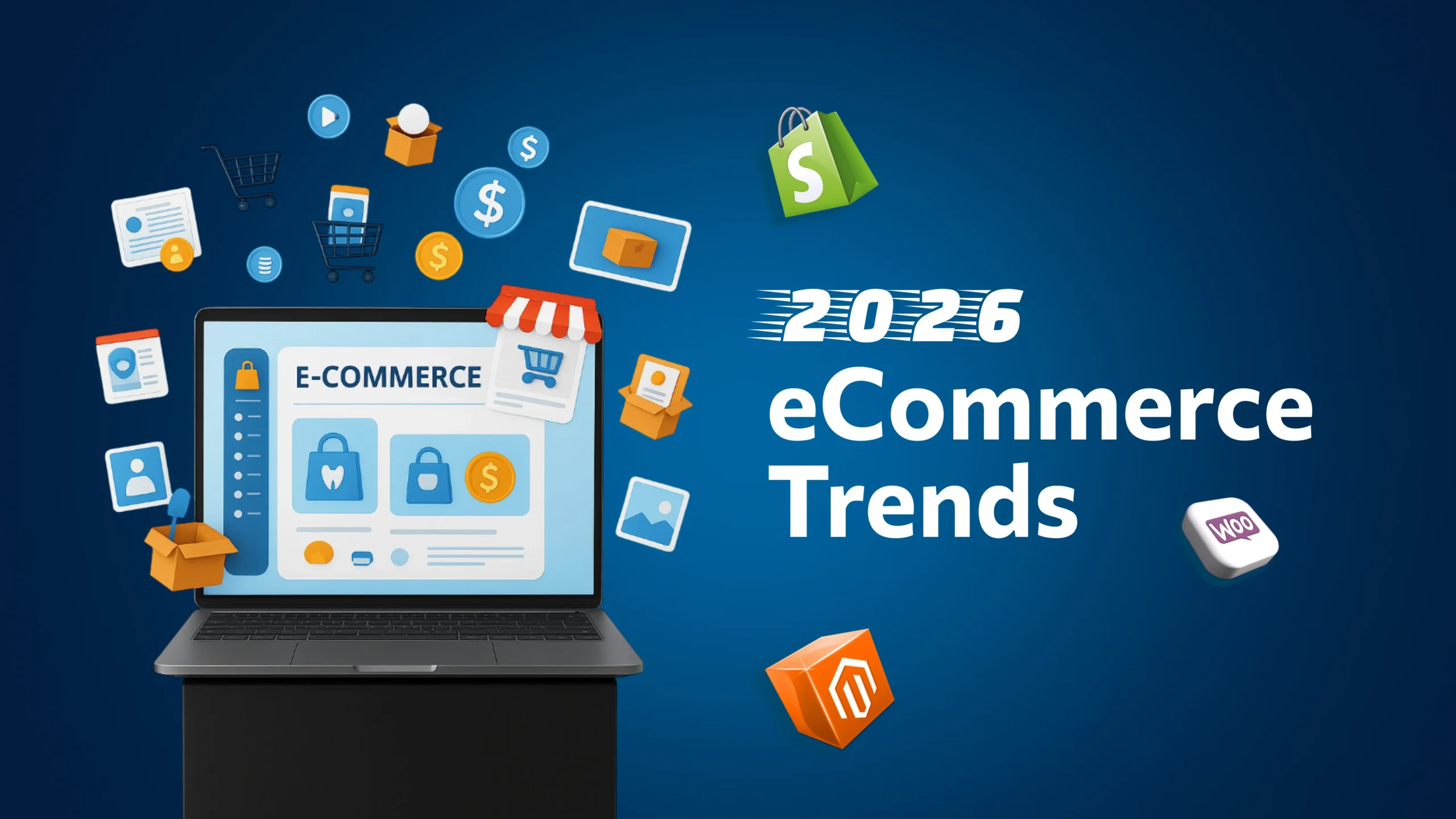
The world of online retail is changing faster than ever. What once started as a simple process of listing products online has evolved into a sophisticated digital experience powered by personalization, automation, and data. As we step deeper into 2025, e-commerce development continues to redefine how brands engage customers, process transactions, and deliver value.
For businesses today, staying ahead means more than just launching a store it means adapting to the future. The e-commerce development company you choose and the technologies it adopts will determine how well you compete in this new era of innovation. Let’s explore the top trends shaping the future of e-commerce development in 2025 and what they mean for your business.
1. Headless Commerce Becomes the New Normal
Headless commerce the decoupling of front-end and back-end systems has been a growing trend for years, but in 2025 it’s going mainstream. Brands increasingly want more flexibility and space to represent products and experiences across a host of channels, including the web, mobile apps, social platforms, and even in smart devices.
A good e-commerce development agency will develop solutions that let you change content or run design experiments without breaking the back end. 9f This modular development speeds up the process, increases performance, and simplifies scalability.
If you need an e-commerce development company, then look for one that can competently do so with headless architectures and API-first strategies. It’s how your e-commerce website development will become future-proof.
2. AI and Personalization Drive the Customer Journey
Artificial Intelligence (AI) is no longer a buzzword; it’s the backbone of modern e-commerce development services. In 2025, AI tools are helping brands personalize everything from product recommendations and search results to pricing and customer support.
AI analyzes behavior data in real time, allowing businesses to deliver tailored shopping experiences that convert better. Chatbots powered by natural language processing (NLP) now act as personal shopping assistants, while predictive analytics help brands anticipate what customers want before they even search for it.
For any business aiming to stay competitive, partnering with an e-commerce development agency that integrates AI capabilities is no longer optional; it’s essential.
3. Voice and Visual Search Revolutionize Shopping
The way people search for products is transforming. Thanks to voice assistants like Alexa, Google Assistant, and Siri, voice commerce is expected to grow as a share of online sales. Similarly, visual search where users upload an image to find similar products is simplifying discovery for millions of shoppers.
An experienced e-commerce development company now prioritizes integrating voice search optimization and visual recognition tools into online stores. These features improve accessibility, user experience, and conversion rates.
For example, a customer could say, “Find me a pair of running shoes under $100,” or upload a photo to find similar styles instantly. Incorporating these technologies during e-commerce website development ensures your brand stays ahead of changing search behaviors.
4. Sustainable eCommerce Takes Center Stage
Consumers are more environmentally conscious than ever, and brands are being held accountable. In 2025, sustainability isn’t a marketing gimmick, it’s a core expectation.
Modern e-commerce development services are evolving to include eco-friendly features such as carbon-neutral shipping options, digital receipts, recyclable packaging integrations, and transparent sourcing information.
Your e-commerce development company should help design systems that highlight sustainability efforts through data dashboards or customer engagement tools. By weaving environmental responsibility into your e-commerce website development, you appeal to values-driven customers and build long-term brand trust.
5. Augmented Reality (AR) and Virtual Try-Ons Enhance Shopping Confidence
One of the biggest challenges in online shopping is uncertainty. “Will this look good on me?” or “Will this fit my space?” In 2025, AR and VR technologies are bridging that gap.
Through AR integrations, customers can visualize furniture in their living room or try on glasses, clothes, and accessories virtually before making a purchase. Advanced e-commerce development agencies are embedding AR directly into product pages to offer immersive shopping experiences.
When choosing an e-commerce development company, ask about their ability to integrate AR APIs or custom 3D viewers during e-commerce website development. The future of e-commerce is interactive and AR is leading the charge.
6. Omnichannel Integration Becomes a Necessity
Customers now move fluidly between platforms discovering products on Instagram, checking reviews on a website, and purchasing through a mobile app. Omnichannel integration is no longer optional; it’s a critical strategy for success.
A forward-thinking ecommerce development agency ensures seamless synchronization between all channels web, mobile, social, and offline. This means consistent product data, pricing, inventory management, and order tracking across every touchpoint.
With robust ecommerce development services, your customers experience your brand as one unified ecosystem, regardless of how or where they shop.
7. Data Privacy and Security Take Priority
As e-commerce grows, so does the risk of cyber threats. In 2025, data privacy and compliance with global standards like GDPR and CCPA are major priorities. Shoppers are more cautious about where they share their personal data, and companies that fail to secure it quickly lose trust.
A reputable e-commerce development company will implement end-to-end encryption, secure payment gateways, tokenization, and multi-factor authentication. Regular vulnerability testing and compliance updates are now part of standard e-commerce development services.
Choosing a partner who takes data protection seriously ensures your business reputation stays intact while keeping your customers safe.
8. Mobile-First Development Rules the Market
Mobile commerce is set to dominate 2025, accounting for nearly three-quarters of all e-commerce sales. Consumers want fast, frictionless experiences on smartphones from browsing to checkout.
The best e-commerce development companies are adopting a “mobile-first” approach. This means designing for smaller screens first, optimizing for speed, simplifying navigation, and implementing one-click checkout options.
If your e-commerce website development doesn’t prioritize mobile optimization, you risk losing a significant share of traffic and sales. Responsive design is no longer enough; it’s about performance, accessibility, and ease of use.
9. Subscription Commerce and Loyalty Programs Grow Stronger
In 2025, subscription-based models continue to rise. From beauty boxes to meal kits, consumers love convenience and predictability. Innovative e-commerce development services now include subscription management systems, auto-renewal functionality, and customer dashboards.
At the same time, loyalty programs are becoming more dynamic. Instead of simple points, brands are gamifying rewards or offering exclusive community access. The right e-commerce development agency can integrate these systems seamlessly into your platform, enhancing retention and lifetime value.
Your e-commerce development company should think beyond transactions they should help you build long-term relationships with your customers.
10. Analytics and Automation Redefine Decision-Making
Data drives the future of e-commerce development. In 2025, businesses will rely on AI-driven analytics and automation tools to make real-time decisions from managing inventory to predicting sales trends.
A capable e-commerce development company will integrate business intelligence dashboards, automated workflows, and marketing automation systems that reduce manual work while increasing accuracy.
These insights not only optimize operations but also guide more innovative marketing and personalization strategies, ensuring every action is backed by data rather than guesswork.
11. The Rise of Progressive Web Apps (PWAs)
PWAs combine the best of mobile apps and websites offering fast, engaging experiences without downloads. They work offline, load instantly, and can send push notifications, making them ideal for e-commerce.
In 2025, ecommerce website development increasingly favors PWAs for their cost-effectiveness and cross-platform compatibility. Forward-thinking ecommerce development agencies are adopting this technology to deliver app-like experiences directly through browsers helping businesses reach a wider audience with less effort.
Conclusion
The future of e-commerce isn’t just about technology, it’s about creating meaningful, seamless experiences for customers. From AI and AR to headless systems and sustainability, 2025 is a year of transformation.
Choosing the right e-commerce development company means finding a partner that stays ahead of these trends while aligning technology with your business goals. The best ecommerce development agencies focus on strategy, creativity, and measurable results, not just coding.
As e-commerce development services continue to evolve, businesses that embrace innovation and invest in forward-thinking e-commerce website development will stand out from the crowd. The key is to start now, stay adaptable, and partner with developers who understand that the future of e-commerce is as much about people as it is about technology.